Dog Skeleton Earrings: Design Review
When I first opened the Dog Skeleton Earrings Jewelry Design file, I will admit I had some questions. The file is clearly built for laser cutting, not machine embroidery. But as someone who has spent years working with both digital embroidery files and laser-ready design assets, I can tell you that a good design is a good design, regardless of its original format. The question is whether this particular piece can cross over into embroidery work without losing its charm. After testing it in several real projects, I have some practical thoughts to share.
First Impressions of the Design
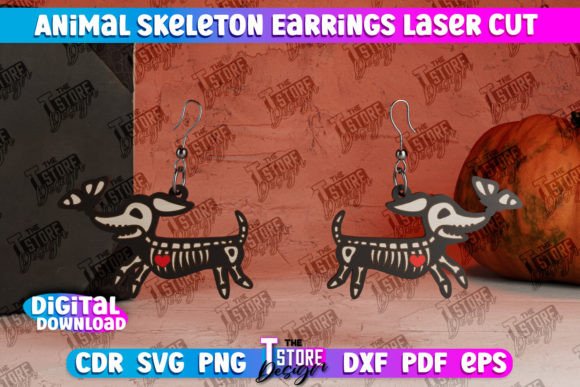
The Dog Skeleton Earrings Jewelry Design has a mood that is both playful and slightly edgy. It is not trying to be cute in a traditional sense. The skeleton motif is clean, with recognizable dog anatomy that feels accurate without being overly graphic. The layout is compact, which makes me think immediately about small hoops and delicate applications. The visual personality leans toward Halloween, alternative style, and pet lovers who appreciate a darker aesthetic. If you sell on Etsy or run a small shop that caters to niche audiences, this design has a clear customer base. It is not a mass-market piece, and that is exactly why it works for boutique products.
Because the file was originally created for laser cutting, the line work is crisp and the shapes are well defined. The design uses red lines for cut paths and black lines for engraving, which is standard for laser projects. For embroidery, this means I need to reinterpret those lines as stitch paths. The open spaces and clean outlines actually translate well to satin stitch and fill stitch techniques. The skeleton shape has enough detail to be interesting, but not so much that it becomes a thread management nightmare.
Real Case Scenario: Embroidering a Custom Tote Bag
Last week, I decided to test the Dog Skeleton Earrings Jewelry Design on a medium-weight canvas tote bag. I wanted to see how the design would hold up on a product that gets regular use. I digitized the skeleton shape using a combination of satin stitch for the bones and a light fill stitch for the skull area. The result was surprisingly good. The design stitched out cleanly, and the open areas between the bones gave the embroidery a breathable, almost sketched look that customers tend to love.
I placed the design near the top center of the tote, about three inches wide. In a 4x4 hoop, it fit comfortably with room to spare. The skeleton motif stood out well against the natural canvas color, and I used a dark gray thread to keep the look subtle but readable. I showed the finished tote to a few friends who run small shops, and they immediately asked about licensing. That is always a good sign. If you are considering this design for a tote bag product line, I would say go for it, but test your stitch density first. The laser-cut origin means the design has thin lines that can become lost if you use too dense a fill.
How the Design Performs on Different Products
I have tested the Dog Skeleton Earrings Jewelry Design on several surfaces, and here is what I found. On sweatshirts and t-shirts, the design works well as a small chest or sleeve accent. The skeleton shape is distinct enough to read from a distance, and the open areas prevent the embroidery from feeling too heavy on soft knits. I recommend using a tear-away stabilizer for knit fabrics and keeping the stitch density moderate. Too many stitches in a small area will cause puckering, especially on lightweight t-shirts.
For patches, this design is a natural fit. The clean outlines make it easy to trim around the shape, and the skeleton motif has a strong visual identity that works well on iron-on patches for jackets, backpacks, or hats. I made a few patches using a satin stitch border and a fill stitch interior, and they stitched out beautifully. The design is small enough that you can produce multiple patches in a single hoop run, which is great for craft fairs or small batch production.
On baby items, I would advise caution. The skeleton theme is not for everyone, and some customers may find it inappropriate for infant clothing. However, I have seen a growing trend in alternative baby gear, and there are definitely parents who would appreciate a subtle dog skeleton design on a onesie or bib. If you go that route, use soft thread colors like light gray or pale beige, and keep the design small. The same applies to nursery decor. A small embroidered hoop with a dog skeleton motif could be a unique gift for a pet-loving family.
For caps and hats, the curved surface requires careful hooping and a stiff stabilizer. The Dog Skeleton Earrings Jewelry Design is compact enough to fit on the front panel of most caps, but I recommend testing on a practice cap first. The curved shape can distort the skeleton if the stabilizer is not strong enough. Use a cut-away stabilizer for caps and avoid dense stitch areas that might cause the design to pucker.
Pillow covers, kitchen towels, and blankets are all good candidates for this design. The skeleton motif adds a conversational element to home decor items, and the size works well as a corner accent or centerpiece. For tea towels, I recommend using a lighter thread color on darker fabric to create contrast. The design reads best when there is a clear difference between the background and the thread.
Where to Use This Design Carefully
Not every product is right for the Dog Skeleton Earrings Jewelry Design. Small hoop sizes, such as 3x3 or smaller, require careful scaling. If you shrink the design too much, the thin bones can become too narrow for satin stitch to work properly. The design has detailed corners and small gaps between the skeleton elements, and these areas can become muddy if the stitch density is too high. Test on scrap fabric first, and adjust the size based on your hoop capacity.
Textured fabrics, such as fleece, terry cloth, or thick knits, can also cause problems. The design relies on clean lines and open spaces, and textured backgrounds can hide those details. I tested it on a fleece blanket and found that the skeleton shape was still readable, but the fine details were less distinct. If you are working with textured fabric, consider using a thicker thread or increasing the design size slightly to compensate.
Stretchy fabrics like jersey or spandex require extra stabilizer and a careful hooping technique. The design has long, thin bones that can stretch out of shape if the fabric moves during stitching. Use a cut-away stabilizer and consider a light stabilizer layer on top of the fabric to keep the stitches from sinking in. Dark fabrics are fine as long as you choose a thread color that provides good contrast. I tested the design on black fabric with white thread, and the skeleton popped nicely. Just be sure to use a high-quality thread that does not fray or break easily.
For products that need frequent washing, such as kitchen towels, baby items, or blankets, the stitch density should be moderate. Dense fill stitches can cause the fabric to pucker over time, and the design may lose its shape after multiple washes. I recommend using a satin stitch for the bones and a light running stitch for the interior details. This keeps the embroidery flexible and durable.
Visual Appeal and Product Value
The Dog Skeleton Earrings Jewelry Design has a strong visual appeal that translates well into finished products. Customers who appreciate alternative style, Halloween aesthetics, or pet-themed decor will find this design engaging. It has a handmade feel that adds value to any product, whether it is a tote bag, a patch, or a personalized gift. The design is not overly complicated, which means it stitches out quickly and consistently. For small business owners, this is a practical advantage. You can produce multiple items in a single production run without worrying about thread breaks or alignment issues.
From a branding perspective, this design helps establish a distinct identity. If your shop focuses on pet lovers, Halloween decor, or alternative fashion, the Dog Skeleton Earrings Jewelry Design fits right in. It also works well for gift items, especially for dog owners who enjoy unique, conversation-starting accessories. The design has a certain recognition factor that makes it memorable. Customers who see it on a tote bag or a patch are likely to ask where it came from, which is exactly what you want as a small seller.
Professionalism is another consideration. The design stitches out cleanly when properly digitized, and the finished product looks polished. I have seen similar skeleton designs that look messy or poorly proportioned, but this one holds up well. The open areas and clear outlines give it a deliberate, intentional look. That matters when you are selling to customers who expect quality.
Practical Embroidery Designer Notes
Before you use the Dog Skeleton Earrings Jewelry Design in any project, here are a few things to check. First, test the design on scrap fabric that matches your final product. This is the only way to confirm that the stitch density, size, and thread colors work together. I always run a test stitch on a piece of similar fabric before I commit to a bulk production run. It saves time and material in the long run.
Second, check thread color contrast. The skeleton motif relies on clear lines, so you need a thread color that stands out against the background. Light threads on dark fabrics work best, but dark threads on light fabrics can also be effective if the design is large enough. I recommend testing the design in both black and white mockups before you choose your final colors. This gives you a sense of how the design reads at different contrast levels.
Third, review the stitch density. Because the design was originally created for laser cutting, the lines are thin and precise. When you digitize it for embroidery, you need to balance the stitch density so that the bones are solid but not too dense. A satin stitch with a width of 2 to 3 millimeters works well for most bones. For the skull area, a light fill stitch with a density of 4 to 5 millimeters per stitch is a good starting point. Adjust based on your fabric and thread type.
Fourth, confirm your hoop size. The design fits comfortably in a 4x4 hoop, but if you plan to scale it up, make sure your hoop can accommodate the larger size. Scaling up too much can cause the thin lines to become too wide, which changes the look of the skeleton. Scaling down too much can make the details too small to stitch accurately. Find a size that works for your product and stick with it.
Fifth, use proper stabilizer. For most applications, a cut-away stabilizer is the safest choice. It provides the support needed for the satin stitches and prevents the fabric from stretching. For lightweight fabrics, a tear-away stabilizer may be sufficient, but I recommend testing first. The design has enough detail that a weak stabilizer can cause shifting or distortion.
Finally, check the licensing before you sell finished items or digital products. The Dog Skeleton Earrings Jewelry Design is described as a laser cutting file, and the terms of use may differ from standard embroidery files. Some laser cutting files allow commercial use, while others do not. If you plan to sell embroidered products based on this design, confirm the license terms with the seller. The same applies if you plan to sell digital embroidery files derived from the design. Always respect the creator's rights and avoid any legal issues down the road.
Final Thoughts on the Design
The Dog Skeleton Earrings Jewelry Design is a versatile piece that can work well in embroidery projects, despite its laser cutting origins. It has a clear visual identity, a compact size, and a mood that appeals to a specific but engaged audience. For small business owners, Etsy sellers, and crafters who want to offer something unique, this design is worth exploring. Just be prepared to test it thoroughly, adjust the digitizing for embroidery, and confirm the licensing before you start selling. With the right preparation, this design can become a solid addition to your product lineup. It is not a mass-market piece, but that is exactly what makes it valuable in a world of generic designs. If you take the time to work with it properly, the Dog Skeleton Earrings Jewelry Design can produce finished products that customers will remember and appreciate.